

Rolling – Profile rolling
At Ollerup Maskinefabrik are we specialists in rolling And Profile rolling of metal workpieces. With our modern equipment and many years of experience, we can deliver workpieces with high precision and consistent quality – whether it involves simple or complex tasks. Our flexible approach and focus on quality make us a preferred cooperation partner for a wide range of industries.
We have extensive knowledge of the different types of metal and rolling methods and are happy to offer professional advice throughout the entire process. This is your guarantee that the final product meets your requirements.
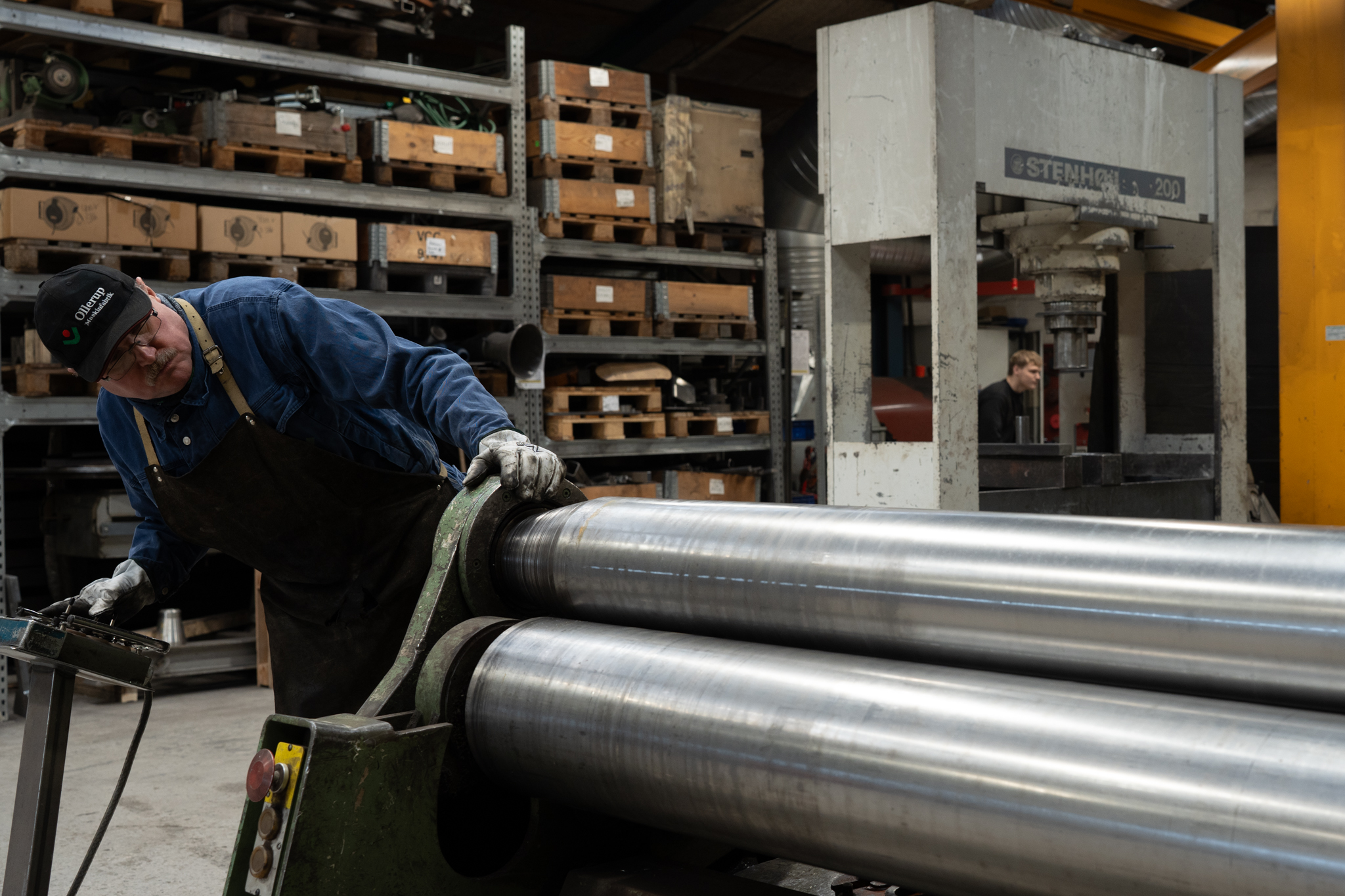
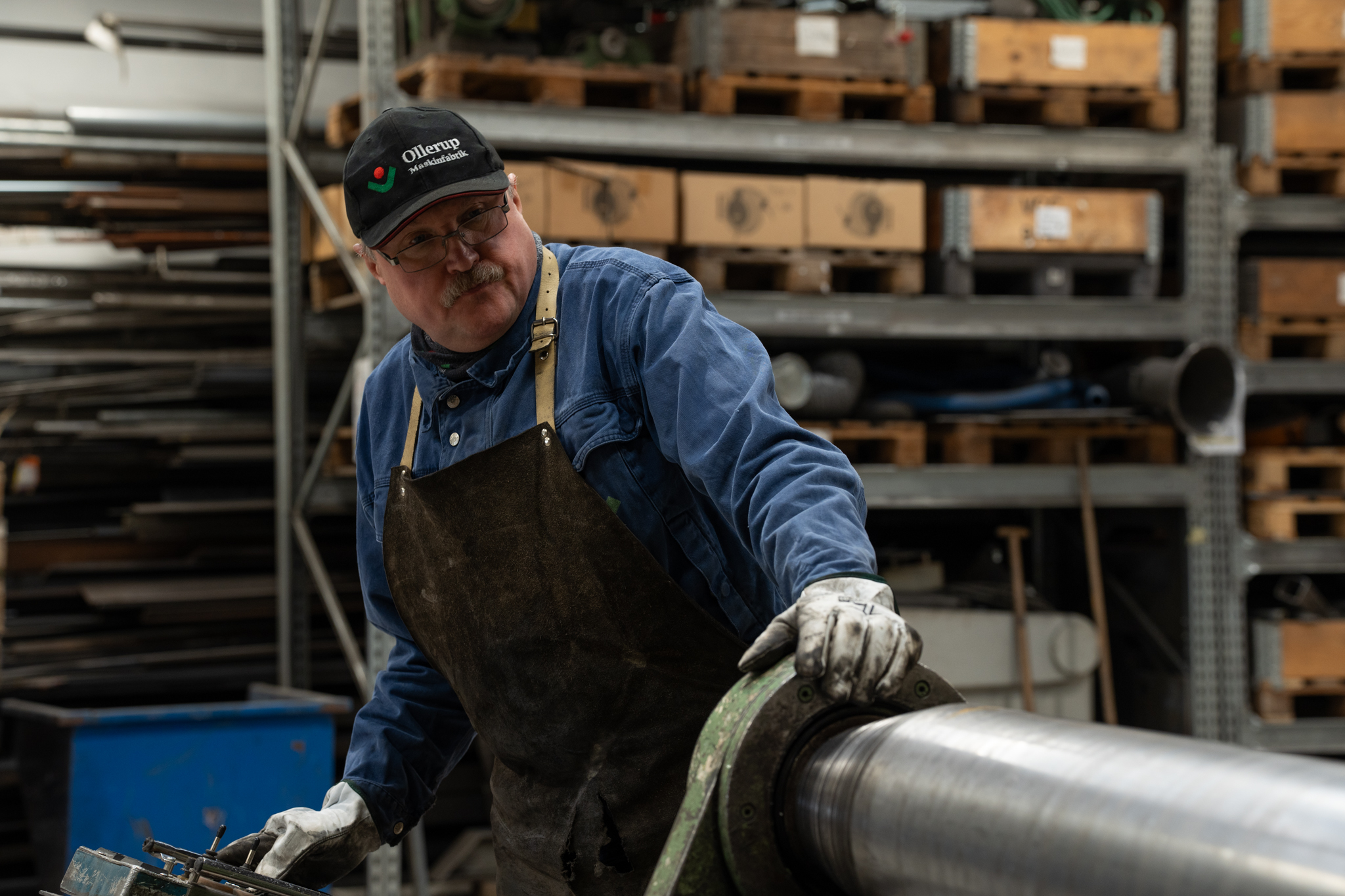
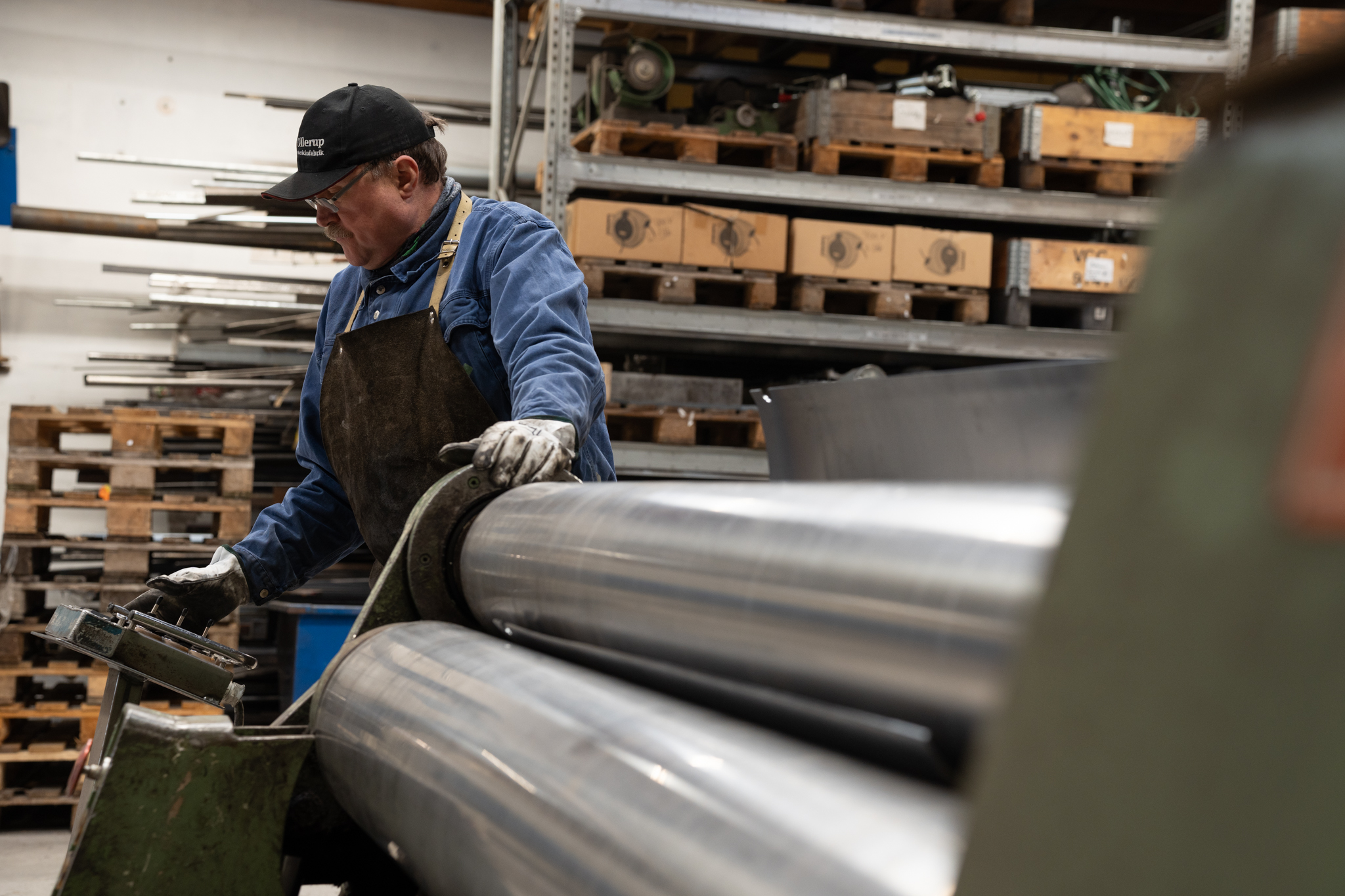
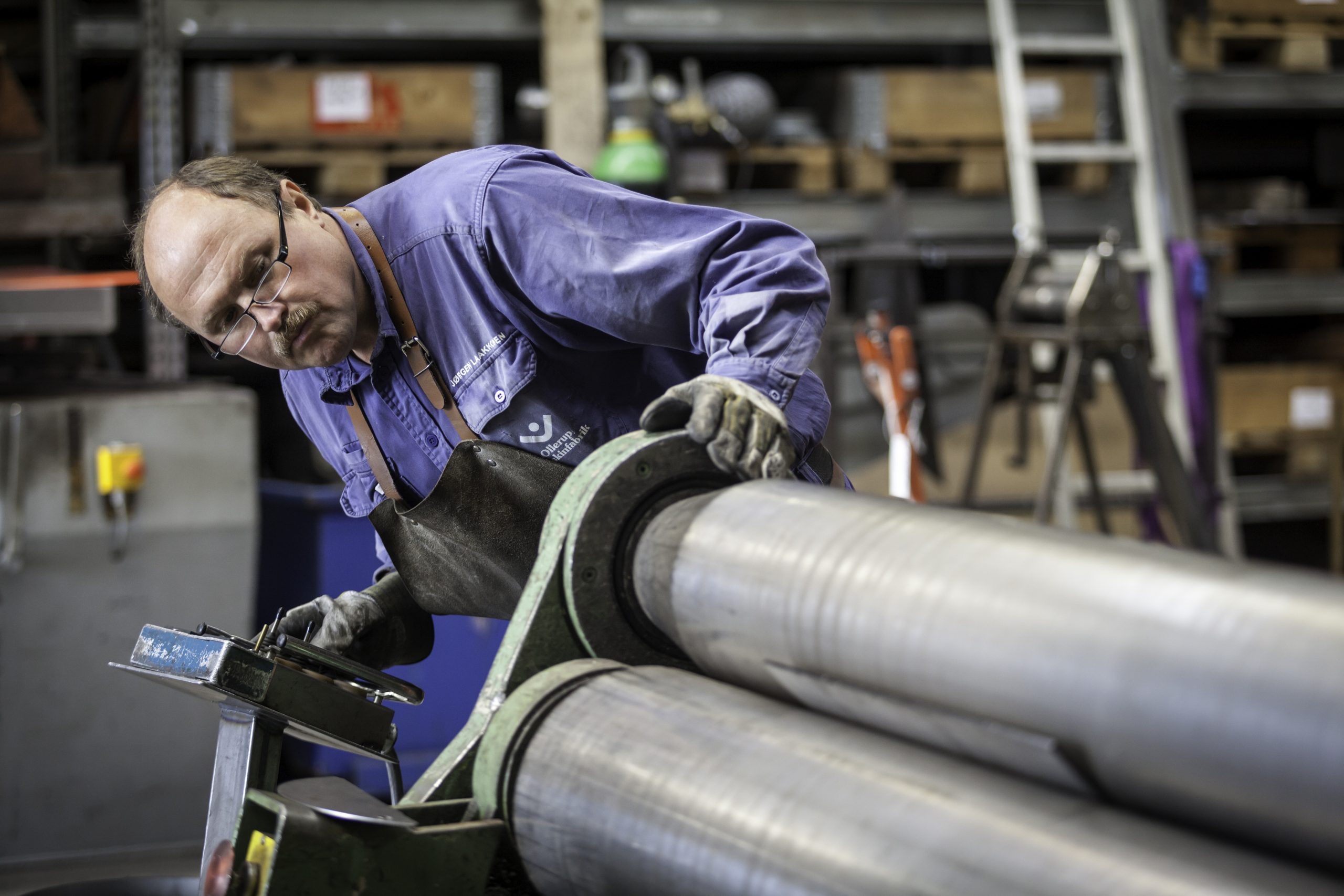
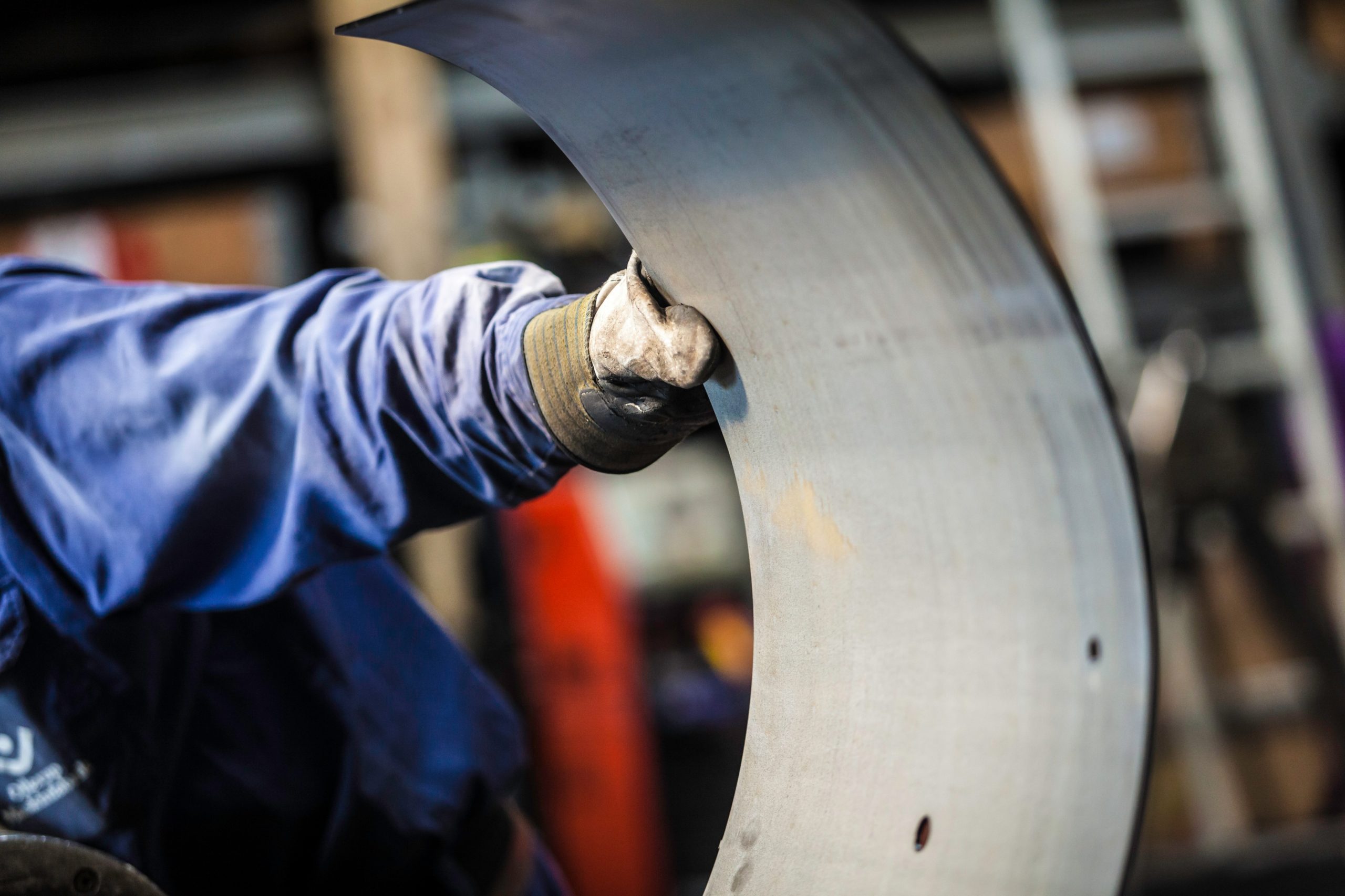
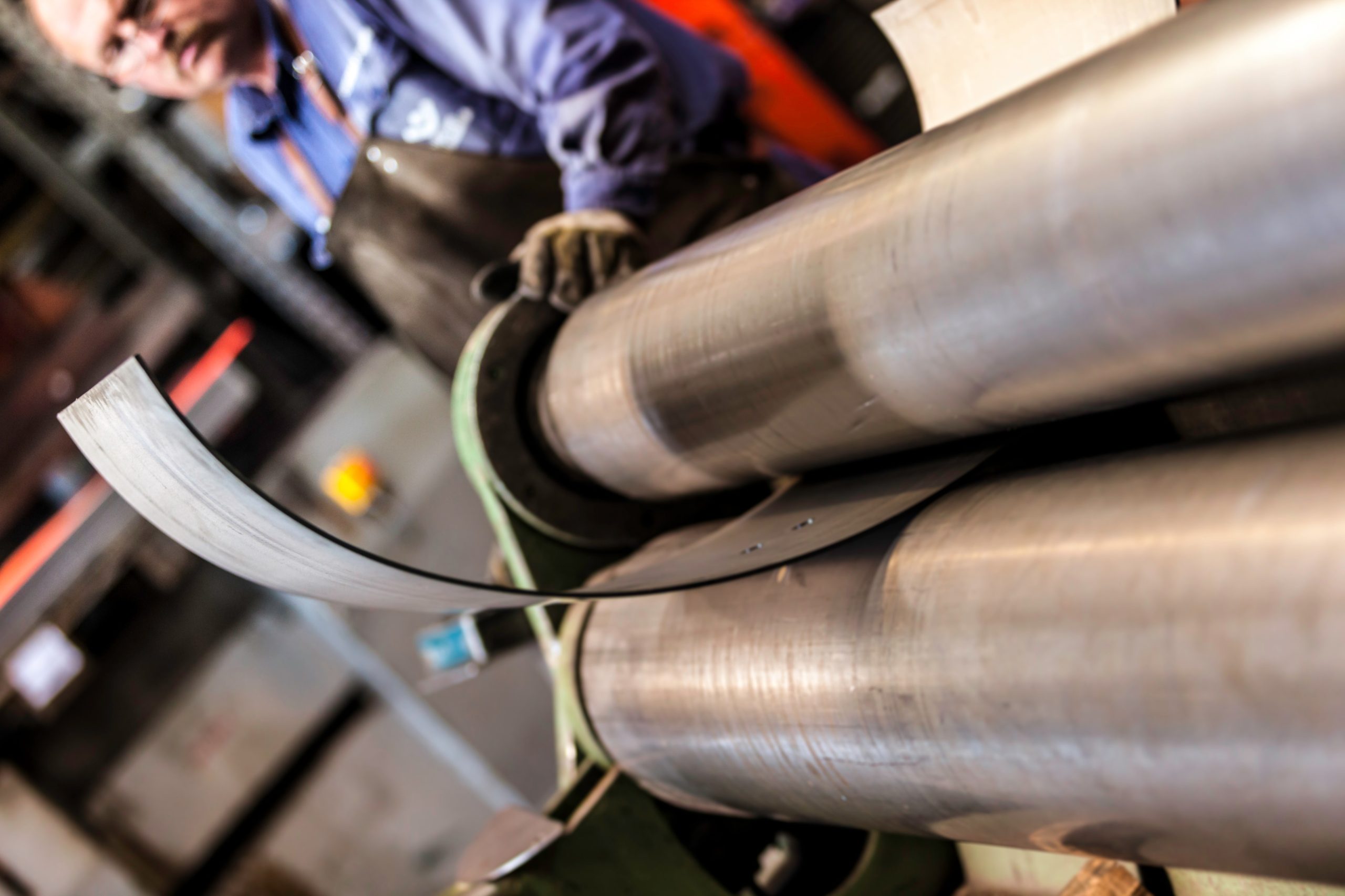
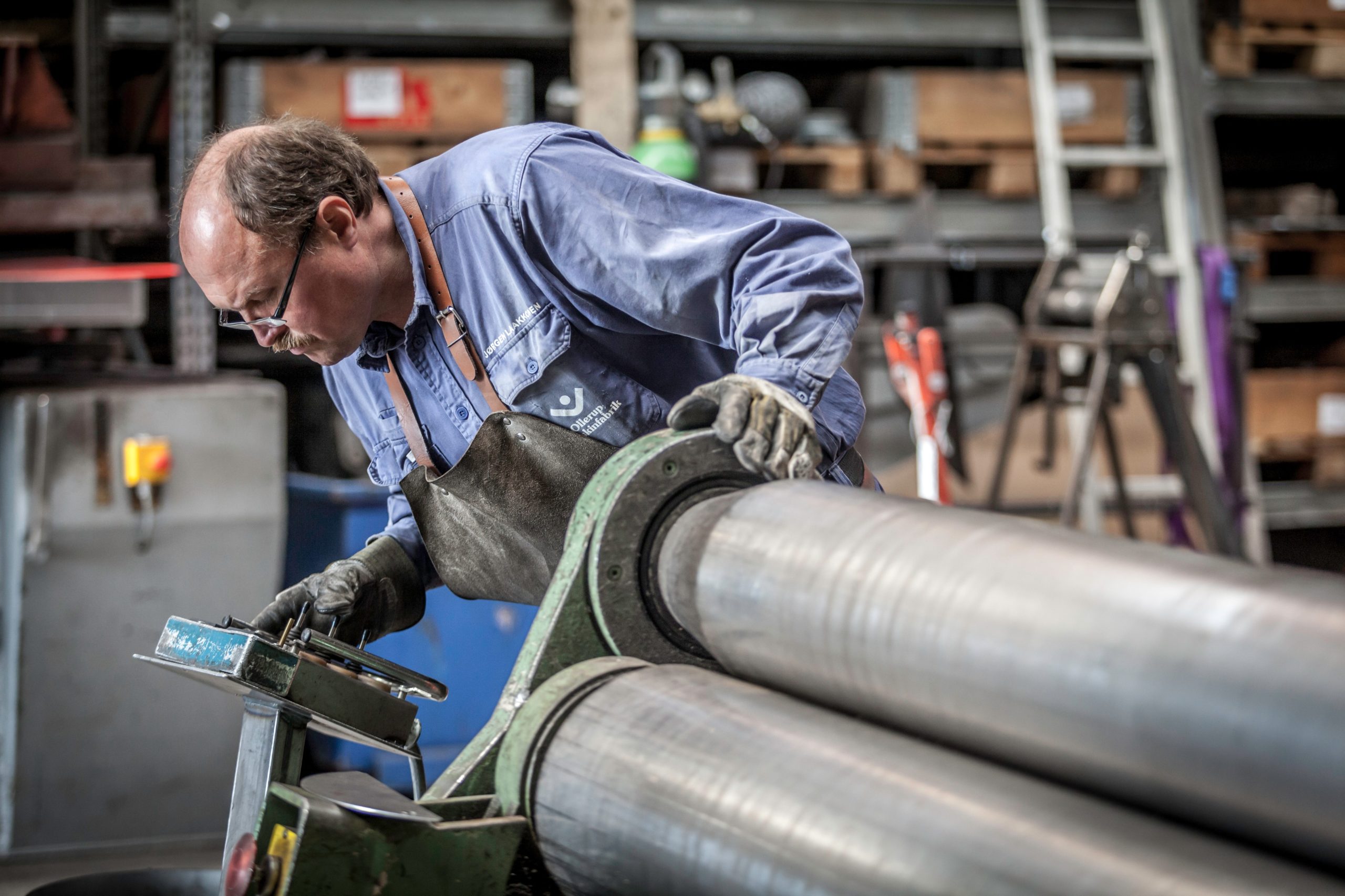
Our Roundo rollers are suitable for straightening and rolling 20 mm plates in widths up to 2500 mm.
We are specialists in rolling
Rolling is the shaping and bending of steel and aluminium profiles to create aesthetic curves and shapes that are found everywhere. At Ollerup Maskinfabrik in Slagelse, we can perform pipe bending, shaping sheet metal, and curves of all conceivable forms to suit the customer's needs and wishes.
We specialise in rolling and profile rolling, so you can always contact us for a professional assessment of your project.
Hvad er valsning?
Rolling is a manufacturing process used to shape metal by passing it through rotating rollers. The purpose is to change the metal's thickness, shape, or structure using controlled pressure. Rolling can be used to create anything from thin metal sheets to complex profiles and curved workpieces, depending on the type of rolling used.
Roll forming is often used in the manufacture of:
- Cylindrical tanks and pipes
- Building structures
- Machine components
- Specially designed steel structures
With our advanced equipment, we can handle both small and large batches with a high degree of precision.
Valsning bruges til at forme metal, typisk ved at sende det gennem et sæt metalvalser. Det kan bruges til at danne ark af metal med varierende tykkelser, eller til at forme metal til forskellige profiler såsom bjælker eller skinner.
Rolling is an important technique in the metal industry, as it can be used to produce a range of different products for cars, planes, ships, and buildings, for example. Rolling makes it possible to create precise and uniform components that would otherwise be difficult to manufacture using other methods.
- Building structures – Load-bearing steel elements, stairs and bridges
- Machine production – Cylindrical parts and custom-made components
- The process industry – Pipes and tanks for the food or chemical industry
- Decorative elements – Curved metal structures for design and architecture
There are two main types of rolling:
Plate rolling - Used to form flat metal plates into curved, cylindrical or conical workpieces such as pipes, tanks and shells.
Profile rolling A method for bending metal profiles such as tubes, bars, and beams to a specific radius or shape. Profile rolling is particularly popular in construction and the manufacture of steel structures.
Hot rolling – Metal is heated to make it more malleable, which makes the process easier and creates a rougher surface.
Cold rolling Takes place at room temperature and provides a more precise surface and higher strength in the finished product
Profile rolling is a technique where bar steel is rolled with dies that match the workpiece, giving it the desired shape. Profile rolling is used, for example, to create pipes and profiles for buildings and infrastructure.
Do you need profile rolling?
We offer profile rolling for all types of profiles in steel, stainless steel, and aluminium. We can roll spirals, rings, plates, and much more.
What materials can be rolled?
We primarily work with steel, stainless steel and aluminium, but we can also handle other metals as required.
What size materials can you roll?
Our Roundo rollers are suitable for straightening and rolling 20 mm plates in widths up to 2500 mm.
What is the difference between plate rolling and profile rolling?
Rolling is a machining process where flat metal sheets are shaped into curved, cylindrical, or conical workpieces such as pipes and tanks. Profile rolling, on the other hand, involves bending metal profiles such as tubes, beams, and rods into specific shapes or radii.
What types of profiles can you roll?
We can roll a wide range of profiles, including tubes, angle iron, U-channels, T-channels, and beams. This allows us to meet diverse needs within construction, machine production, and other industries.
Vi sikrer præcision og kvalitet i valsningsprocessen gennem flere metoder: * **Omfattende kvalitetskontrol:** Vi har strenge kvalitetskontrolprocedurer på plads i alle stadier af produktionsprocessen, fra råmaterialeinspektion til færdigvareinspektion. * **Avanceret teknologi:** Vi anvender topmoderne valseteknologi og udstyr, der sikrer høj præcision og ensartethed i vores produkter. Dette inkluderer automatiseret styring, online målesystemer og avanceret overvågning. * **Erfarent personale:** Vores team består af dygtige og erfarne fagfolk, der er uddannet til at overvåge og styre valsningsprocessen med stor omhu og ekspertise. * **Regelmæssig vedligeholdelse:** Vi udfører regelmæssig vedligeholdelse og kalibrering af alt udstyr for at sikre, at det fungerer optimalt og opretholder de krævede tolerancer. * **Sporbarhed:** Vi sikrer fuld sporbarhed af alle materialer og processer, så vi kan identificere og adressere eventuelle afvigelser øjeblikkeligt. * **Kontinuerlig forbedring:** Vi arbejder løbende på at forbedre vores processer baseret på feedback, analyse af data og implementering af nye teknologier og metoder.
We use CNC-controlled rollers that ensure high precision and consistency in every component. Our experienced operators closely monitor the process to maintain our high quality standards.
Can I handle both single-piece production and mass production?
Yes, we are flexible and can handle both single-piece production and larger series, depending on the customer's needs.
 Dansk
Dansk  English (UK)
  Deutsch