
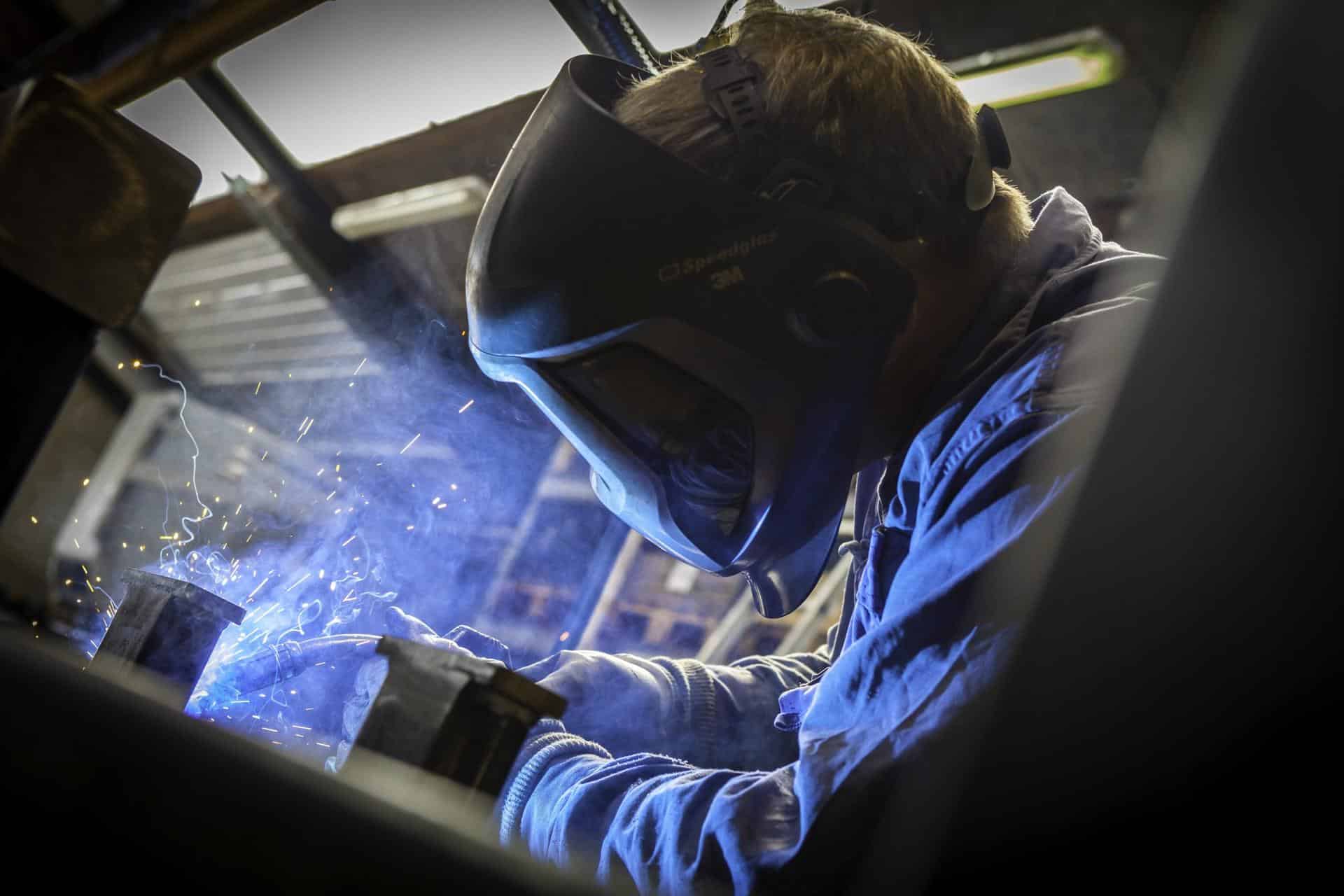
Welding
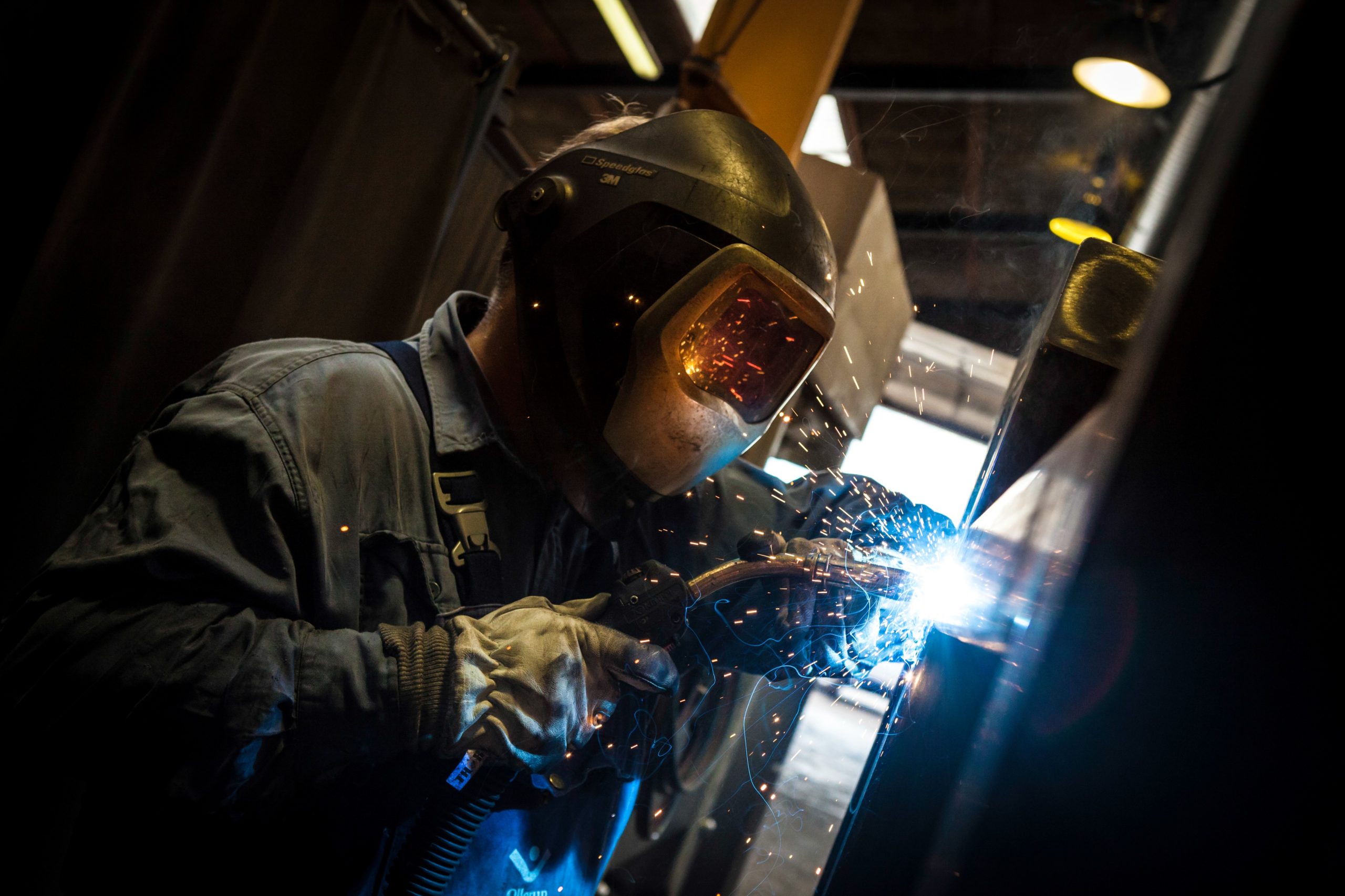
At Ollerup Maskinfabrik A/S, fabrication and welding work is carried out using TIG, MIG, MAG, MMA and laser welding – and robotic welding when the job is a series. We supply steel structures to EN 1090-1 and -2 up to and including execution class EXC 3, and our welding production is certified to EN ISO 3834-2.
We have many years of experience in welding and assembling steel and plate structures for some of the most demanding customers in Danish industry and construction. Our certified welders work with great precision, on schedule and with full documentation and traceability – regardless of batch size.
Welding stainless steel, aluminium and mild steel
We weld all three common materials, and each material has its own requirements for method, preparation and documentation:
- Stainless steel welding – mainly TIG and laser welding, with documentation for the food and pharmaceutical industries.
- Aluminium welding – TIG and MIG welding, one-offs and series.
- Welding in ordinary steel – MAG, TIG and robotic welding, and CE-marked steel structures to EN 1090 EXC 3.
Whether the welding is a stand-alone job or part of a larger delivery with cutting, bending and rolling, advice on welding method and execution is part of the package.
MIG and MAG welding
MIG/MAG welding is an extremely flexible welding method that can be used for aluminium, steel and stainless steel. During the MIG/MAG welding process, we add wire, which is melted onto the material.
The difference between MIG welding and MAG welding is the use of gas. When using MIG (Metal Inert Gas), the gas is inert, which protects against the atmosphere. When using MAG (Metal Active Gas), the gas is active. The gas functions as an active part of the chemical process.
TIG welding
When using TIG welding (Tungsten Inert Gas), we use an inert gas that prevents other gases from accessing the welding material.
We often use TIG for pipe and pipeline welding. Tungsten has an extremely high melting point and is therefore often used for more precise and accurate welding on thin material.
MMA welding
MMA welding, Manual Metal Arc, is also called electrode welding. MMA welding is a welding method where an electrode (electronic rod) is mounted on an electrode holder and forms an arc between the electronic rod and the material.
MMA welding can be used for outdoor welding or for welding pipes, among other things.
Robotic welding for series
For series and parts with long weld seams we use our robotic welding cell with two welding stations. The robot welds steel, stainless steel and aluminium and handles parts up to Ø2200 mm and 4000 mm in length, with up to 2000 kg between centres.
Laser welding
As something relatively new, we offer LASER WELDING of various workpieces in both stainless and black steel.
In laser welding, we join metals using a concentrated laser beam with a power of up to 3 kW. When welding stainless or black steel plates in thinner material thicknesses, joining can be carried out at a very high welding speed, measured in metres per minute. In laser welding, the heat input is concentrated on a very small area of the workpieces, which reduces the risk of distortion, twisting and geometric impact on the workpieces, as well as reducing the total heat input to an absolute minimum!
Compared to other welding processes we offer, it provides laser welding the following advantages:
- High welding speed.
- Significantly reduced heat influence and low heat input.
- Narrow, precisely placed weld seams.
- Problem-free welding of thinner materials such as foils and relatively thin sheets.
- Welding foil/thin sheets to thicker materials, and material thicknesses can be carried out problem-free.
Certificate welding
At Ollerup, we have certified welding, and this is within TIG, MAG, and Electrode. Our welding certifications are in the following areas:
- TIG 141, 142
- MAG 135, 136, 138
- Electrode 111
Documentation and quality assurance
Our welding production is certified to EN ISO 3834-2, and we have our own certified welding coordinator (IWT). This means we can supply:
- CE-marked steel structures to EN 1090-1 and -2 up to and including EXC 3
- Welding procedure specifications (WPS) and weld logs
- Welding and material certificates
- NDT and pressure test reports, performed by an accredited third party
- Measurement report from our Zeiss 3D coordinate measuring machine
See all our certificates.
Questions about welding
Which welding methods do you offer?
We weld with TIG, MIG, MAG and MMA (stick), laser weld at up to 3 kW and use robotic welding for series. We choose the method based on material, wall thickness and finish requirements.
Which welding certificates do your welders hold?
Our welders are certified in TIG (141, 142), MAG (135, 136, 138) and stick welding (111). Our welding production is certified to EN ISO 3834-2.
Can you supply steel structures to EN 1090?
Yes. We supply CE-marked steel structures to EN 1090-1 and -2 up to and including execution class EXC 3.
What documentation can we get with the delivery?
As required, we supply welding procedure specifications (WPS), weld logs, welding and material certificates, NDT and pressure test reports from an accredited third party, and a measurement report from our Zeiss 3D coordinate measuring machine.
Can you also cut and form the parts before welding?
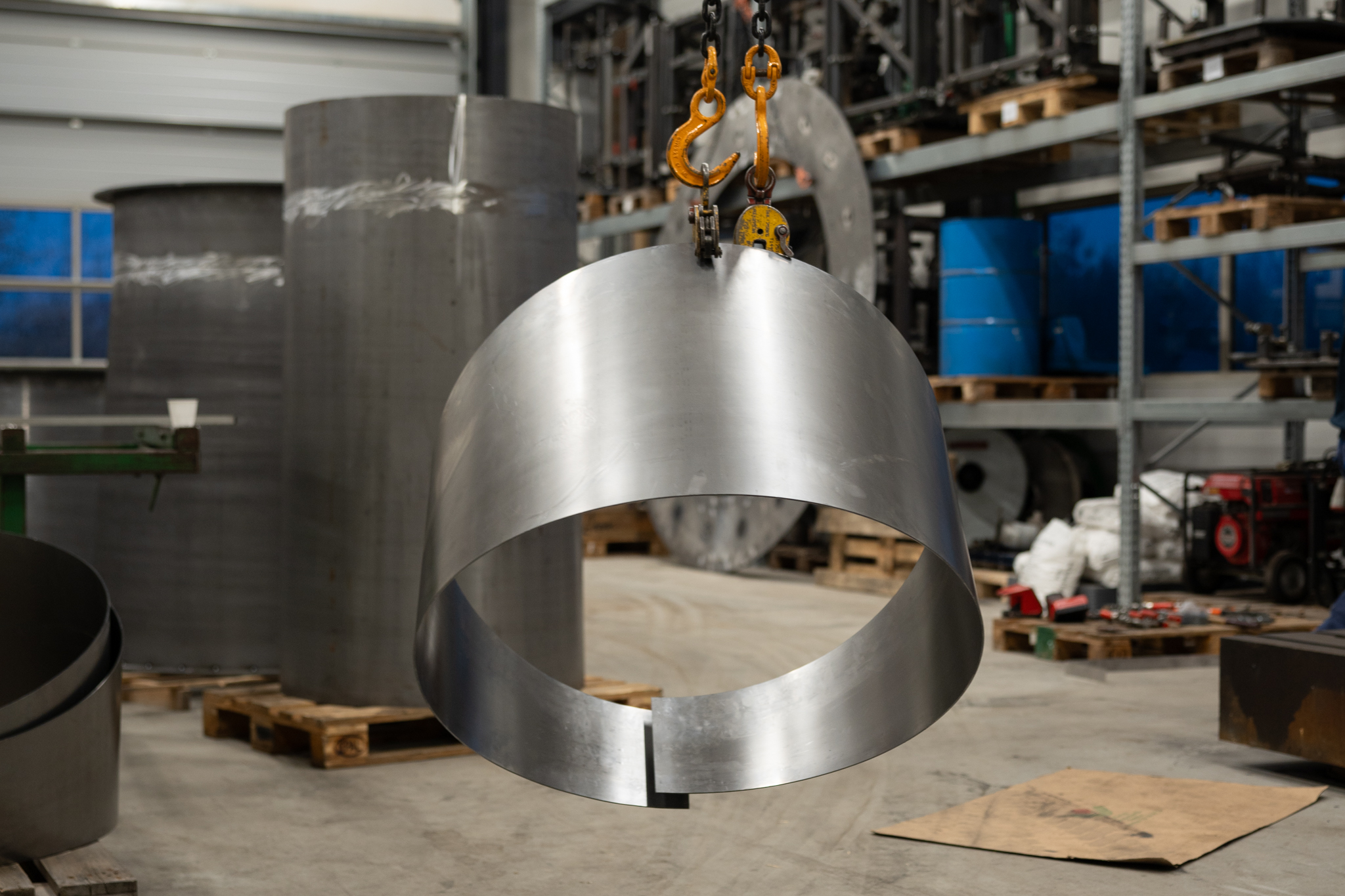
Yes. We laser cut, plasma cut, flame cut and shear plates, press brake bend with up to 500 tonnes and 4500 mm bending length, and roll plates up to 20 mm. That way the whole part can be made in one place.
How large are the parts you can weld?
In our robotic welding cell we weld parts up to Ø2200 mm and 4000 mm in length, with up to 2000 kg between centres. Larger parts are welded manually, and we have cranes with up to 12 tonnes lifting capacity at every workstation.
Do you have a project? Contact us today
At Ollerup Maskinfabrik, we are experts in all types of welding and utilise modern technology to achieve the perfect result. Contact us today.
 Dansk
 English (UK)
 Deutsch